



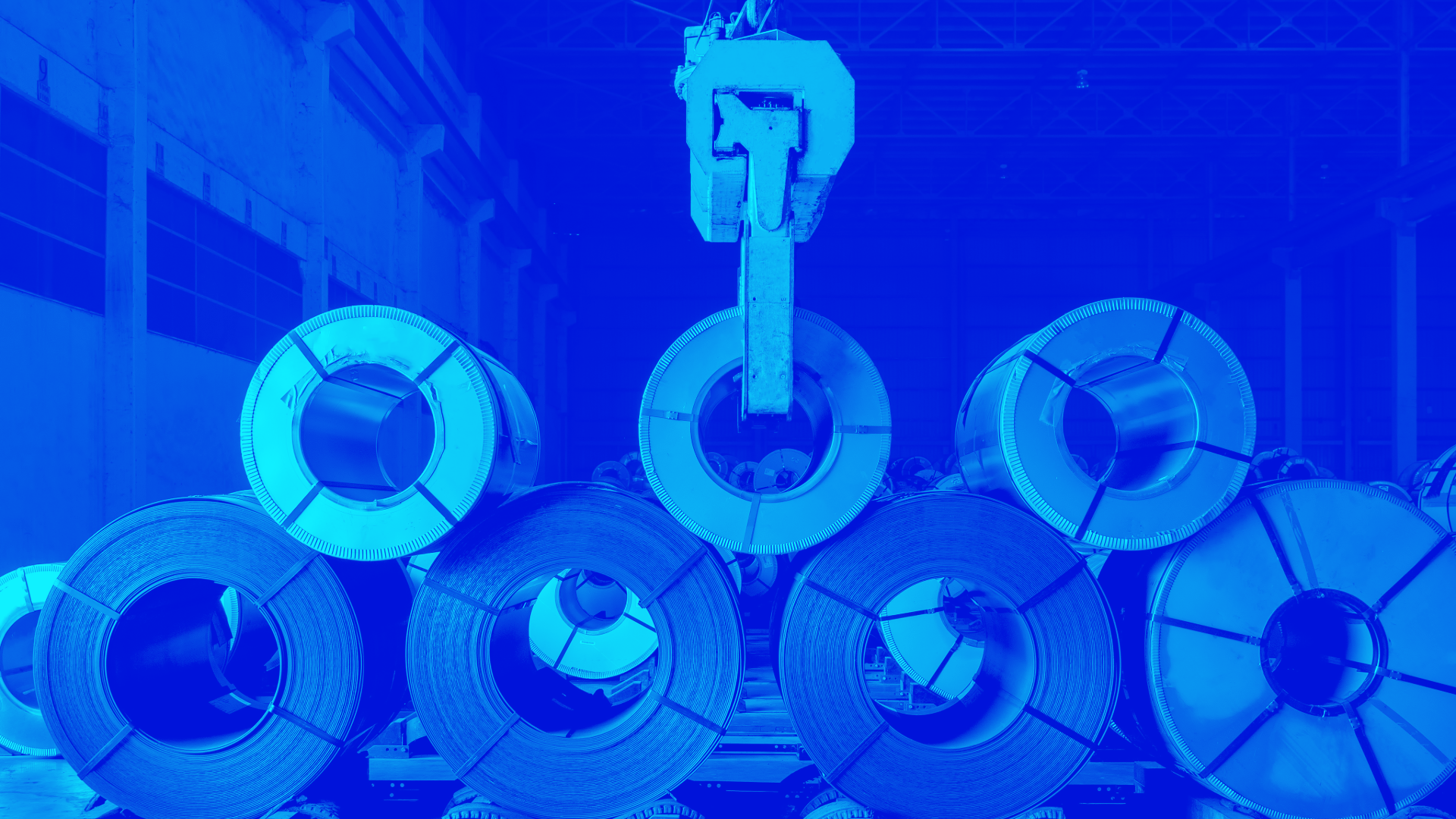
Manufacturers are feeling the pressure. In Enterprise Minnesota’s 2026 State of Manufacturing survey, 34% of manufacturers named increasing material costs as the biggest challenge to growth (the #1 overall concern), up from 29% in 2025. For companies with $1 million to $5 million in revenue, the figure rises to 39%. Tariffs, workforce shortages, and inflation are also on the list, and the list is longer than it was a year ago.
The Limits of What You Can Control
A manufacturer cannot set commodity prices, decide tariff policy, or dictate what a raw-material supplier charges. Treating those inputs as the only lever leads to a familiar result: a lot of effort spent on negotiations that move the number a few points, followed by the same exposure the next time the market shifts.
The useful question is not “how do we stop material prices from rising?” It is “what part of our landed cost can we actually change?” Landed cost is the full cost of getting material to your dock: the purchase price, the freight, the duties, the handling, and the delays that come with each choice. Several of those pieces are within your control, and freight is one of the least examined.
Freight Lives Inside the Materials Number
Inbound freight is part of landed cost, which means it is part of the materials line on your P&L even though most manufacturers don’t track it that way. A supplier change that looks like a price saving can be offset by a longer haul. A small, irregular order pattern can push a shipment into expensive LTL when a planned consolidation would have moved it on a truckload rate. Surcharges and billing errors can add cost without anyone noticing, because the invoice is paid and the file is closed.
The survey does not separate freight from the 34% figure, so it would be inaccurate to say freight is the cause of rising material costs. It is accurate to say that freight is a cost that flows into materials pricing, and that a manufacturer who measures it has more options than one who does not.
Reactive or Proactive: Where Most Companies Sit
Many supply chains are built to react. They work well when conditions are stable and struggle when they change. The difference between a reactive and a proactive supply chain is not a question of scale or budget. It is a question of how decisions get made and how early the information arrives.
Reactive:
- Buying when a shortage hits.
- Accepting the carrier rate that appears on the quote.
- Reviewing freight cost once a year, after the budget is already spent.
- Learning about a tariff when it shows up on an invoice.
- Adjusting prices to customers after the margin has eroded.
Proactive:
- Modeling landed cost by lane and by supplier before the shock arrives.
- Qualifying alternate sources in advance.
- Reviewing freight KPIs every quarter, not just at contract renewal.
- Running scenarios for the tariff, rate, or capacity changes that are most likely.
- Deciding in advance how and when costs will be passed to customers, supported by data.
The shift is from absorbing change to anticipating it. A proactive team is not guaranteed to avoid cost increases. It is more likely to see them early, understand where they come from, and choose a response before the decision is forced.
What Manufacturers Are Already Doing
The survey shows that many manufacturers are already adjusting. Some of those moves are reactive. Others are the start of a more deliberate approach:
- 60% are passing tariff-related costs on to customers, up from 47% of smaller manufacturers last year to 59%, and from 55% to 67% among larger manufacturers.
- 52% are increasing sourcing from U.S. suppliers, and another 14% are considering it.
- 44% are adjusting financial forecasts and budgets because of the tariff and trade environment.
- 30% are stockpiling key materials, which carries its own cost in working capital and storage.
- 14% are moving operations or sourcing out of China or other high-tariff countries.
Each of these moves changes the freight picture. A new domestic supplier changes lanes and transit times. Stockpiling changes inbound volume and warehouse capacity. Moving sourcing changes the carrier mix. The companies that handle these changes well are the ones that model the freight impact before they commit, not after.
Building an Adaptable Supply Chain
An adaptable supply chain is not a supply chain with unlimited inventory or the newest software. It is one that can see its costs, compare its options, and change direction without a fire drill. Four practices make that possible.
- Visibility. You need current data on what you are paying, for which lanes and suppliers, and how that cost is trending. Freight invoices, carrier performance, and order patterns should be in one place, not spread across spreadsheets and email threads.
- Measurement. Pick the KPIs that drive your spend, not just the total. Cost per mile, cost per pallet, accessorial charges, on-time performance, and vendor compliance each tell you something different. Track them consistently so trends are visible before they become problems.
- Repeatable process. Standard operating procedures turn good decisions into routine ones. When a new carrier is needed, a supplier changes, or a tariff shifts a lane, the team should already know who reviews the change, what data they check, and how the decision is documented.
- Regular review. A quarterly business review is where visibility, measurement, and process come together. It should answer what changed, why it changed, and what the team will do about it. A review that only reports the past is not enough. The useful review looks forward and tests the options.
Automation can support each of these, and the survey shows where manufacturers see the value. Among larger manufacturers, 45% see improving inventory and supply chain management as a positive impact from automation, compared with 21% of smaller manufacturers. The barriers are real, though. Up-front cost is the top obstacle to automation at 38%, and lack of internal technical expertise is the top obstacle to AI at 29%. An adaptable supply chain starts with clear processes and reliable data. The technology should follow the process, not replace it.
How SCS Supports the Proactive Shift
Supply Chain Solutions works with manufacturers and distributors to move from reactive freight management to a proactive model. Our approach combines KPIs, standard operating procedures, and data analytics, supported by our proprietary transportation management system. That gives clients visibility into what they are paying, where it comes from, and what options they have.
In practice, that work includes carrier selection and sourcing, route and load planning, consolidation of smaller shipments, freight bill auditing to catch surcharges and billing errors, and warehousing and fulfillment support when inventory strategy changes. The goal is not to chase the lowest rate in a single quarter. It is to build a network that holds up when conditions change.
The results from our client work show what that looks like. For a remote South Dakota manufacturer, SCS identified an existing overnight lane that was running empty on the return trip and built a Minnesota cross-dock to use it. The change produced $13,368.68 in savings across 130 shipments, along with better delivery performance and no more line-down risk. For a manufacturer with vendors shipping on their own timelines, SCS introduced a dual-date framework and vendor scorecard. That produced a 12% freight cost reduction.
Questions to Ask This Quarter
Whether you work with SCS or not, a few questions can show how proactive your supply chain already is:
- What is our landed cost by material and by lane, and when did we last calculate it?
- Which of our suppliers or carriers could we replace within 30 days if we had to?
- Who sees a tariff or rate change first, and what happens after that?
- Do our freight KPIs drive decisions, or do they only appear in a year-end report?
- If our largest material cost rose 15% next quarter, what would we change, and how long would it take?
The market has changed, and it will keep changing. Raw material prices may not be in your control. The supply chain you use to respond to them is. Want to chat about how to shape up your supply chain and reduce landed costs, give us a shout.

Comments are closed.